




How do the brains of newborns and adults perceive speech sounds?

We are pleased to announce the first study published by Giulia Danielou - a doctoral student at the LPL under the supervision of Clément François - in collaboration with the CRPN and the APHM. It has just been published in the European Journal of Neuroscience as part of the ANRJCJC BABYLANG project led by Clément François:

Reference: Danielou, G., Hervé, E., Dubarry, A.S., Desnous, B., François, C. Event-related brain potentials and Frequency Following Response to syllables in newborns and adults. European Journal of Neuroscience.

Full text article: https://doi.org/10.1111/ejn.70418

Summary:
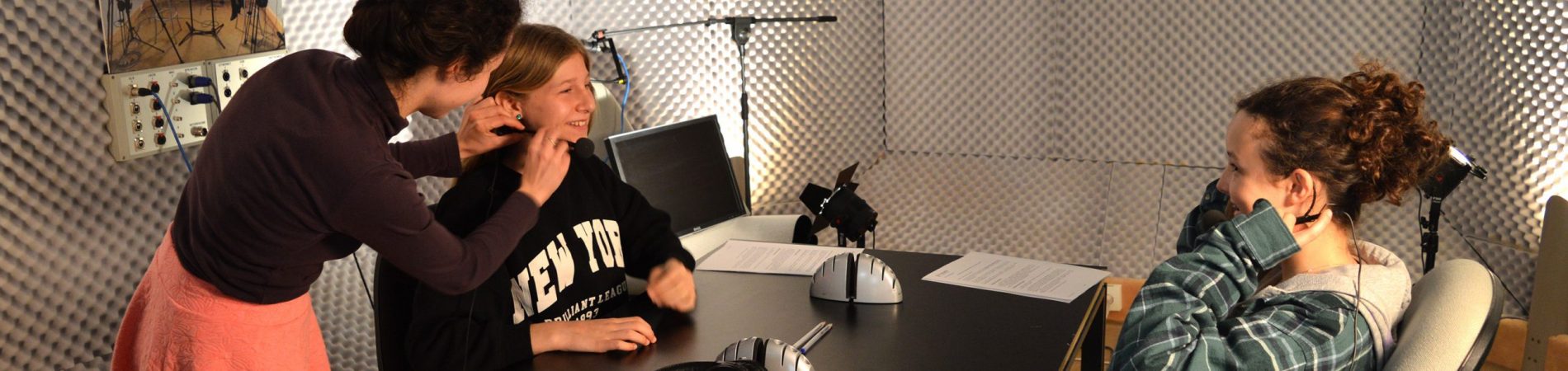
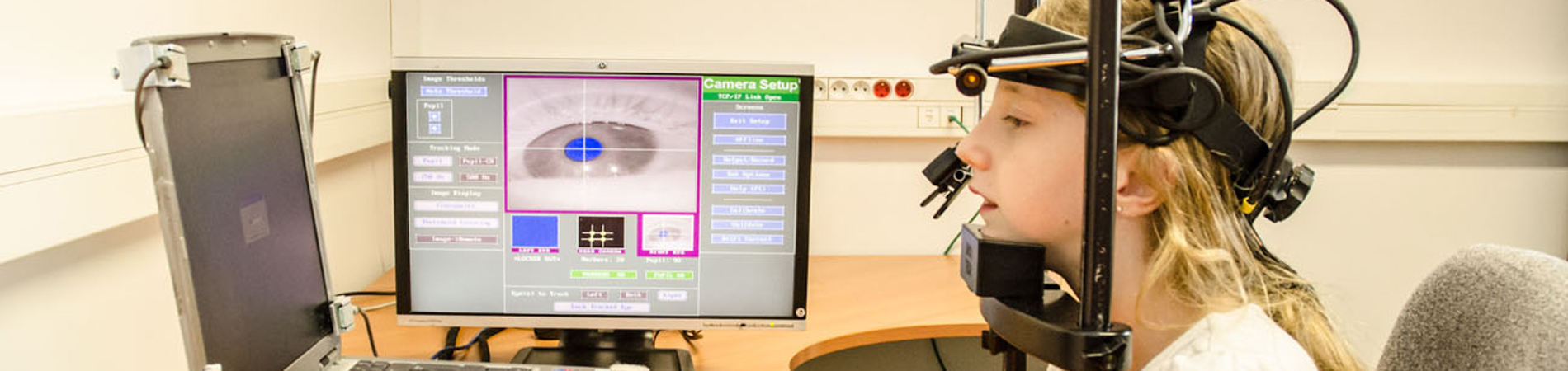
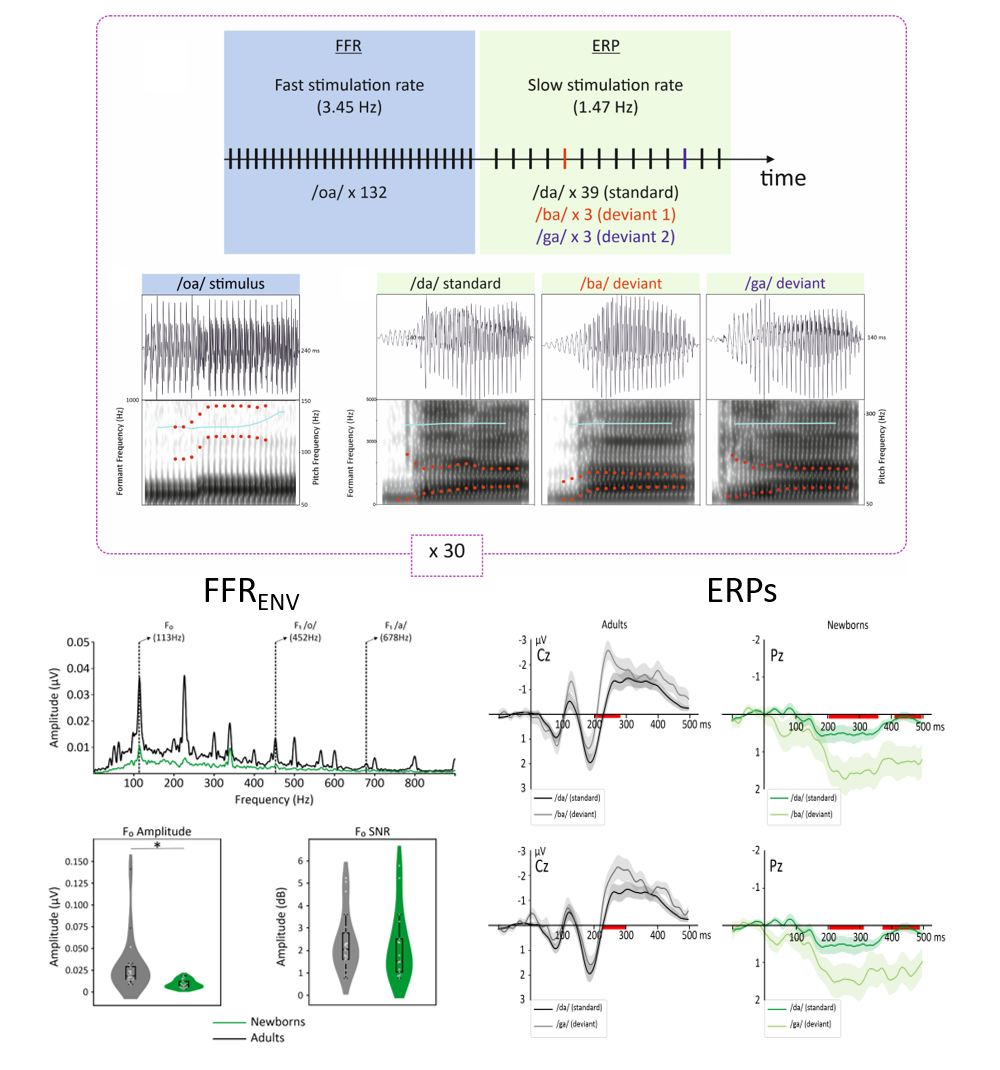
From birth, newborns are able to distinguish speech sounds, an essential skill for learning to speak. But how does their still-immature brain process these sounds compared to that of adults? This study explores the brain mechanisms that enable newborns and adults to perceive syllables such as /ba/, /da/ and /ga/. To do this, they recorded auditory evoked potentials (ERPs) and frequency following responses (FFRs) in 17 three-day-old newborns and 21 young adults. The FFR reflects the encoding of acoustic characteristics of sounds such as fundamental frequency or formants, while ERPs measure the brain's response to category changes in a sequence of repeated syllables. The results confirm that babies are born with brains that are already sensitive to speech sounds, but that their processing is less accurate than in adults. This study confirms the key role that experience and brain maturation play in language acquisition, opening avenues for better understanding the influence of the environment on brain development.


Credits: Authors

Learning new words after a stroke at birth

We are pleased to announce the latest study published by Clément François (LPL-CNRS), in collaboration with Laura Bosch (University of Barcelona) and Antoni Rodriguez-Fornells (University of Barcelona, former Iméra resident 2024/25), among others, in the journal Brain and Language:

Reference: François, C., Ferreri, L., Ripollès, P., Garcia-Alix, A., Rodriguez-Fornells, A., Bosch, L. Evidence for a role of memory in novel word-learning after perinatal stroke. Brain and Language. 274, 105707.

Full text article: https://www.sciencedirect.com/science/article/pii/S0093934X26000027

We are also delighted to welcome Laura Bosch on February 6 for a seminar entitled “Adaptation to a bilingual input and variability in early language acquisition” at the LPL.

Summary:
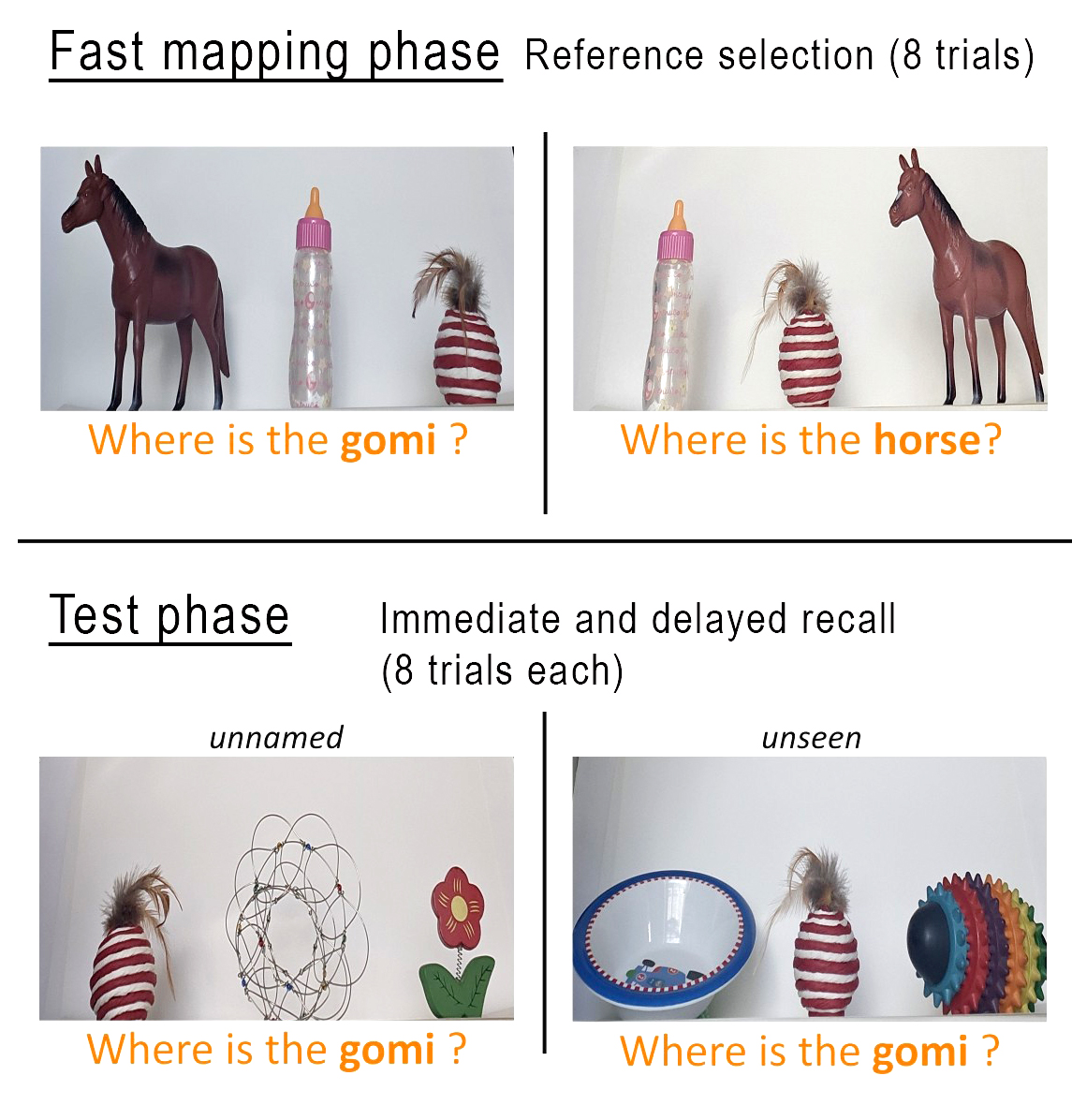
Children with left perinatal arterial ischemic stroke (PAIS) often exhibit language deficits. However, evaluations of learning abilities are scarce. In this study, we compared word-referent associative learning and recall performance using a fast-mapping paradigm in a group of 3.5-year-old children with PAIS and in age-matched controls. The task involved a referent selection phase followed by immediate and delayed recall trials of the novel word-object associations. While no between-group differences were observed in the referent selection and immediate recall, children with PAIS showed lower performance in delayed recall of the newly learned associations. These results suggest that word learning difficulties after PAIS may arise due to a memory retention failure rather than to the process of referent selection during mapping.

Caption: Illustration of the experimental procedure comprising an initial reference selection phase followed by two memory recall phases (immediate and delayed recall).
Credits: Authors

How does intonation reveal bias in polar questions?

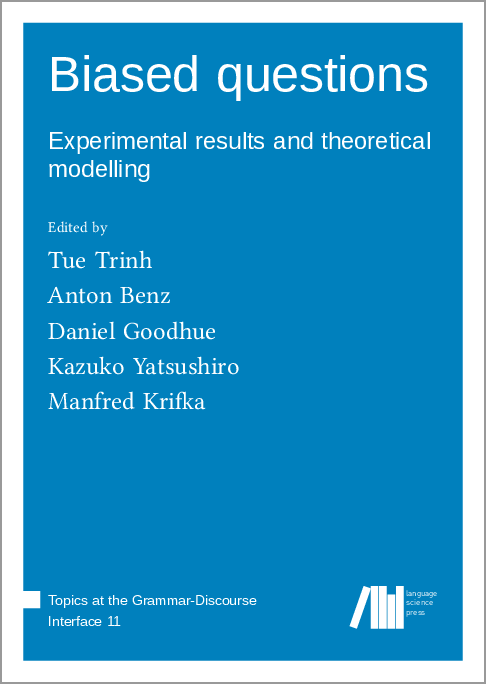
We are pleased to announce the publication of the latest study by Riccardo Orrico (Radboud University, Nijmegen), Cristel Portes and Mariapaola D'Imperio (LPL/amU) in the book Biased questions: Experimental results and theoretical modelling (language science press):

Reference: Orrico, R., Portes, C. & D'Imperio, M. (2025). The contribution of intonation in the conveyance of question bias. In Krifka, M, Trin, T., Kazuko, T., Yatsushiro, K. & Benz, A. (Eds.). Biased Questions: Experimental Results and Theoretical Modelling. Language Science Press, pp. 73-100.

Full text chapter (chap. 3): https://langsci-press.org/catalog/book/487

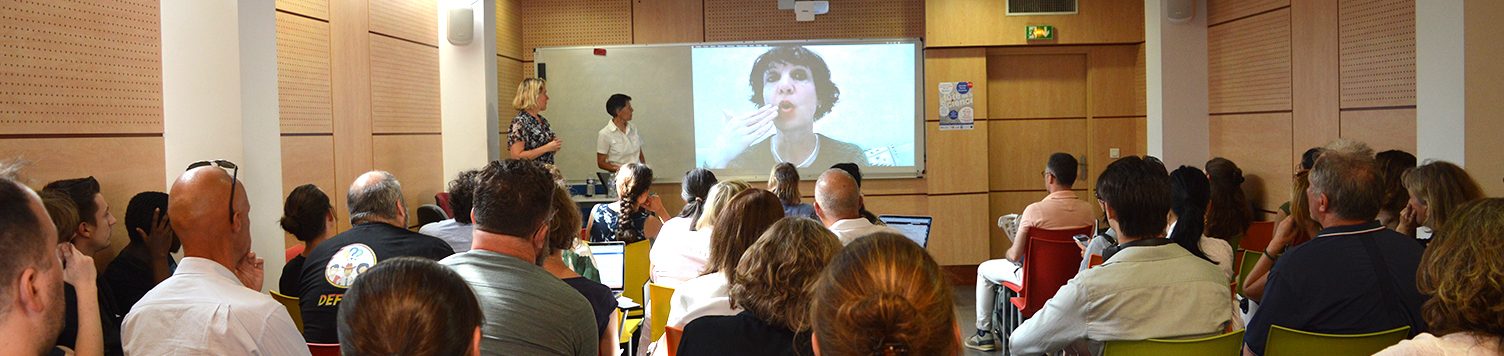
How can grammar be explained in sign language?

Following the first volume published in the ‘Langues signées’ series of the ‘Langues et langage’ collection by Presses Universitaires de Provence, Trésor des expressions de la langue des signes française  (Treasure Trove of French Sign Language Expressions), we are pleased to present the second book published by our colleague Mélanie Hamm, LPL-amU lecturer and researcher and sign language specialist, in collaboration with Jean-François Piquet, sign language teacher and actor:

Reference: Mélanie Hamm, Jean-François Piquet. Le signaire de la grammaire. Presses Universitaires de Provence, Langues et langage collection, Langues signées, 2025.

Link to the PUP page: https://presses-universitaires.univ-amu.fr/fr/actualites/signaire-de-grammaire

Video clip (FSL):https://www.youtube.com/watch?v=Ob_YdXf3vIo

The discursive and prosodic properties of the French connector ‘mais’ in conversational interaction

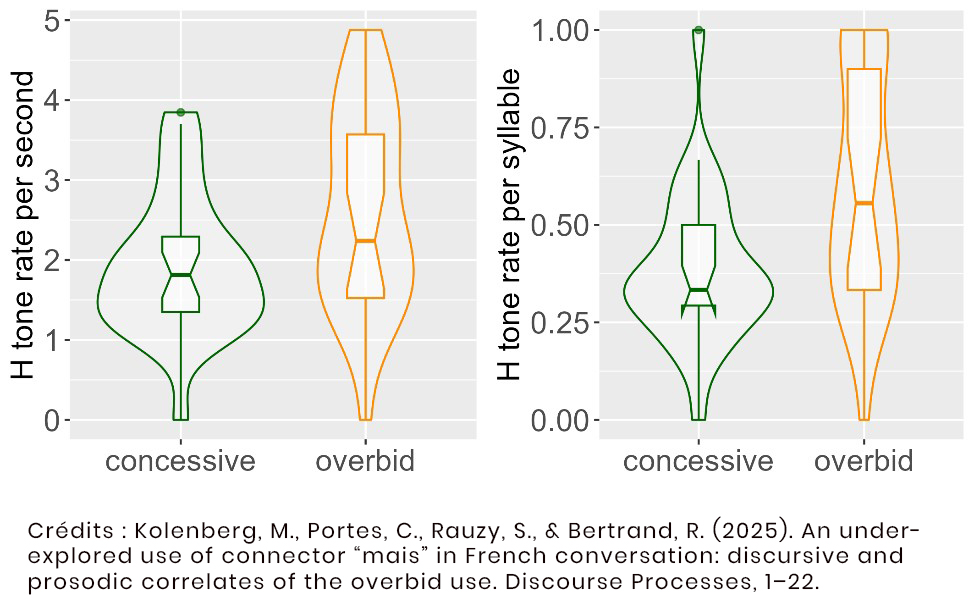
The journal Discourse Processes has just published a study in the field of conversational analysis, the result of collaboration between Marie Kolenberg of KU Leuven and our colleagues Cristel Portes, Stéphane Rauzy and Roxane Bertrand of the LPL:

Reference: M. Kolenberg, C. Portes, S. Rauzy, R. Bertrand. An underexplored use of connector “mais” in French conversation: discursive and prosodic correlates of the overbid use. Discourse Processes, 2025.

Abstract on publisher's website: https://www.tandfonline.com/doi/full/10.1080/0163853X.2025.2564615?src=

Full text article: https://hal.science/hal-05326629v1

How can we help pupils better understand stories?

We are pleased to share with you the study published in Literacy Research and Instruction, which is the result of the postdoctoral project ET T’AS COMPRIS conducted by Lisa Sanchez (ADEF) under the supervision of Sandrine Eschenauer (LPL) and Raphaële Tsao (PsyClé):

Reference: Sanchez, L., Eschenauer, S., & Tsao, R. (2025). Dramatised Reading in the Classroom: Effect on Learner Readers' Inferential Comprehension. Literacy Research and Instruction, 1–24.

Abstract on publisher's page: https://doi.org/10.1080/19388071.2025.2557799

Download the full text (limited to the first 50 impressions of the article)

Does the way we process language change depending on whether we are with others or alone?

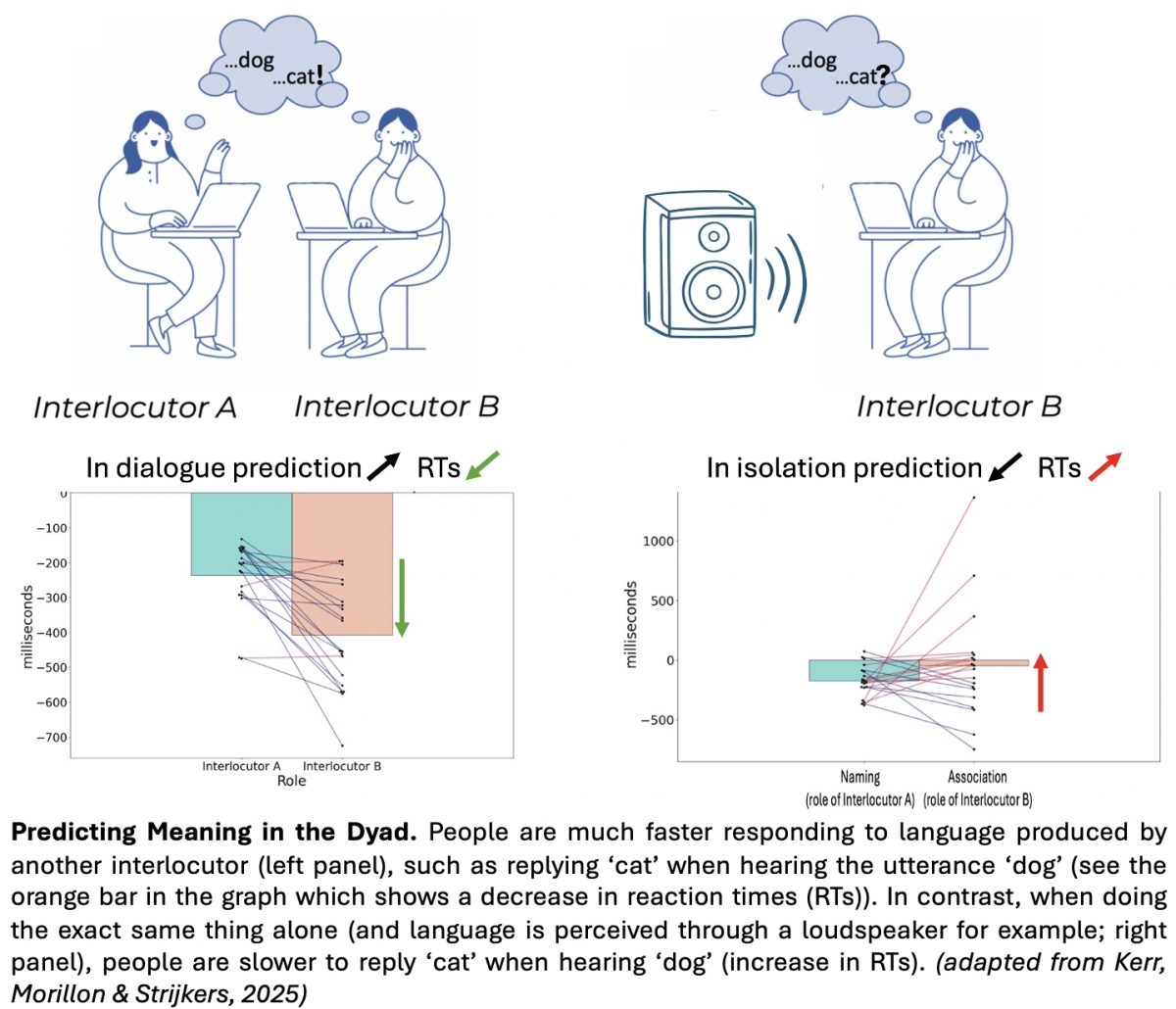
In the first article published as part of the ERC LaDy project, researchers Emilia Kerr (LPL), Benjamin Morillon (INS), and Kristof Strijkers (LPL, project leader) show that word processing and meaning prediction are fundamentally different in social interaction compared to individual language use:

Reference: Kerr, E., Morillon, B., & Strijkers, K. (2025). Predicting meaning in the dyad. Journal of Experimental Psychology: General, Advance online publication, American Psychological Association (APA).

 Full text article: https://doi.org/10.1037/xge0001828

Divulgative highlights on Kudos : https://www.growkudos.com/publications/10.1037%252Fxge0001828/reader

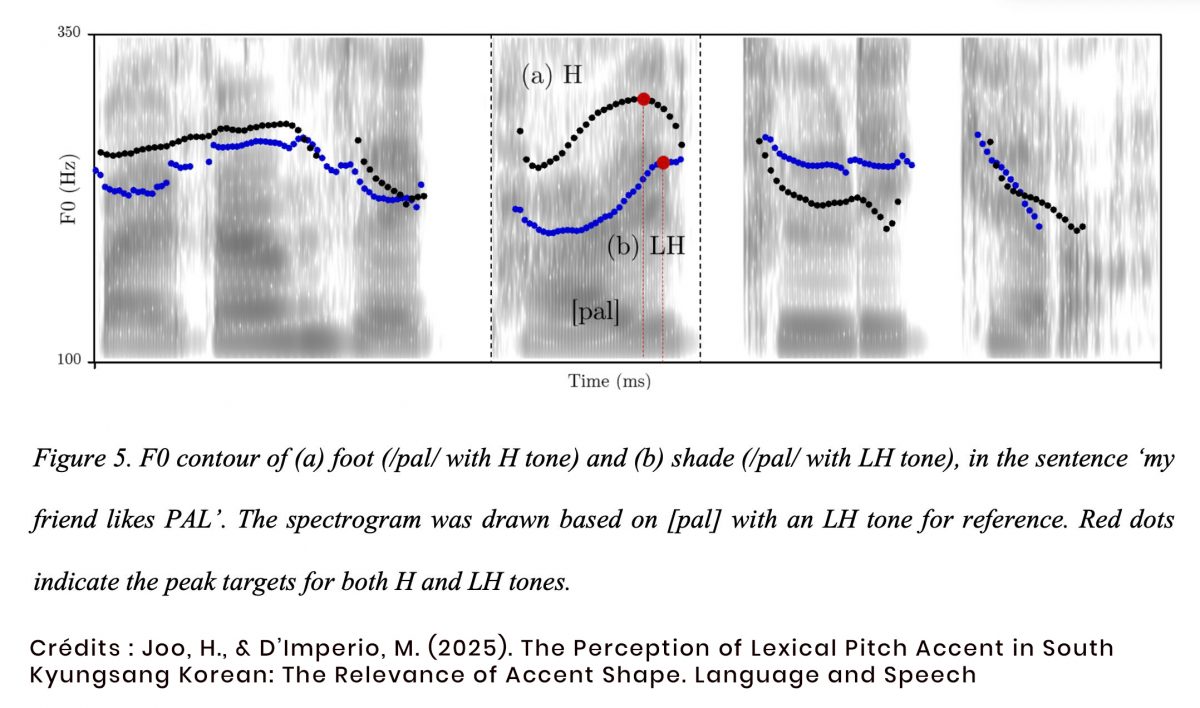
The perception of lexical pitch accent in South Kyungsang Korean

We are pleased to share with you the latest work published by our colleague Mariapaola D'Imperio (LPL-amU) and Hyunjung Joo of Rutgers University in Language and Speech:

Reference: Joo, H., & D’Imperio, M. (2025). The Perception of Lexical Pitch Accent in South Kyungsang Korean: The Relevance of Accent Shape. Language and Speech, 0(0).

Abstract: https://doi.org/10.1177/00238309251368294

Full text access through BibCNRS platform: https://bib.cnrs.fr/ (authentification required)

Speech variability: the nuances of phonetic reduction in conversational speech

We are pleased to announce the latest publication by Kübra Bodur (LPL) in Speech Communication, in collaboration with Corinne Fredouille (LIA), Stéphane Rauzy and Christine Meunier (LPL).

Reference: Bodur, K., Fredouille, C., Rauzy, S., & Meunier, C. (2025). Exploring the Nuances of Reduction in Conversational Speech: Lexicalised and Non-Lexicalised Reductions. Speech Communication, 173, 103268.

Full text article: https://www.sciencedirect.com/science/article/pii/S0167639325000834

 In addition, on 29 October, Kübra will defend her thesis, which aims to better understand the phenomenon of speech reduction, based on empirical studies in phonetics, prosody and developmental research.

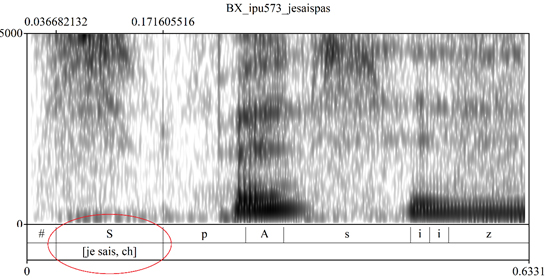
Figure 1

Abstract:
Phonetic reduction, understood as the set of segmental modifications that result in a weakened, shortened, or simplified realization of an expected form, is a central phenomenon of spontaneous speech. This study aims to gain a better understanding of the mechanisms of phonetic reduction, whose influence may vary depending on the characteristics of linguistic units.
We propose to distinguish two types of reductions: lexicalized forms, which have become more or less stabilized in the language (such as chépa for je ne sais pas (Figure 1)), and non-lexicalized forms, which are more contextual and vary depending on speech rate or speaker style.
To test whether these two types of reduction are influenced by the same factors or not, we combined an analysis of frequent and perceptible sequences with an automatic corpus-based detection, focusing on temporally reduced sequences.
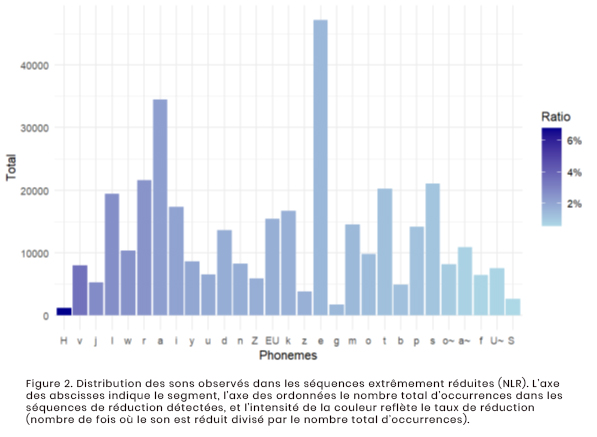
The results show that lexicalized reductions are mainly related to speech duration, while non-lexicalized reductions are more strongly influenced by articulation rate and by certain prosodic or morphosyntactic constraints. We also observe that some segments (Figure 2) and certain expressions, such as tu sais, are more often reduced depending on their discourse function.
This study thus reveals that reduction in speech is not a single phenomenon, but rather a set of distinct processes shaped by different factors. It opens the way to a better understanding of speech variability and its relation to the structure of language.